Uncategorized

The Story Behind Prevailing Torque Locknuts
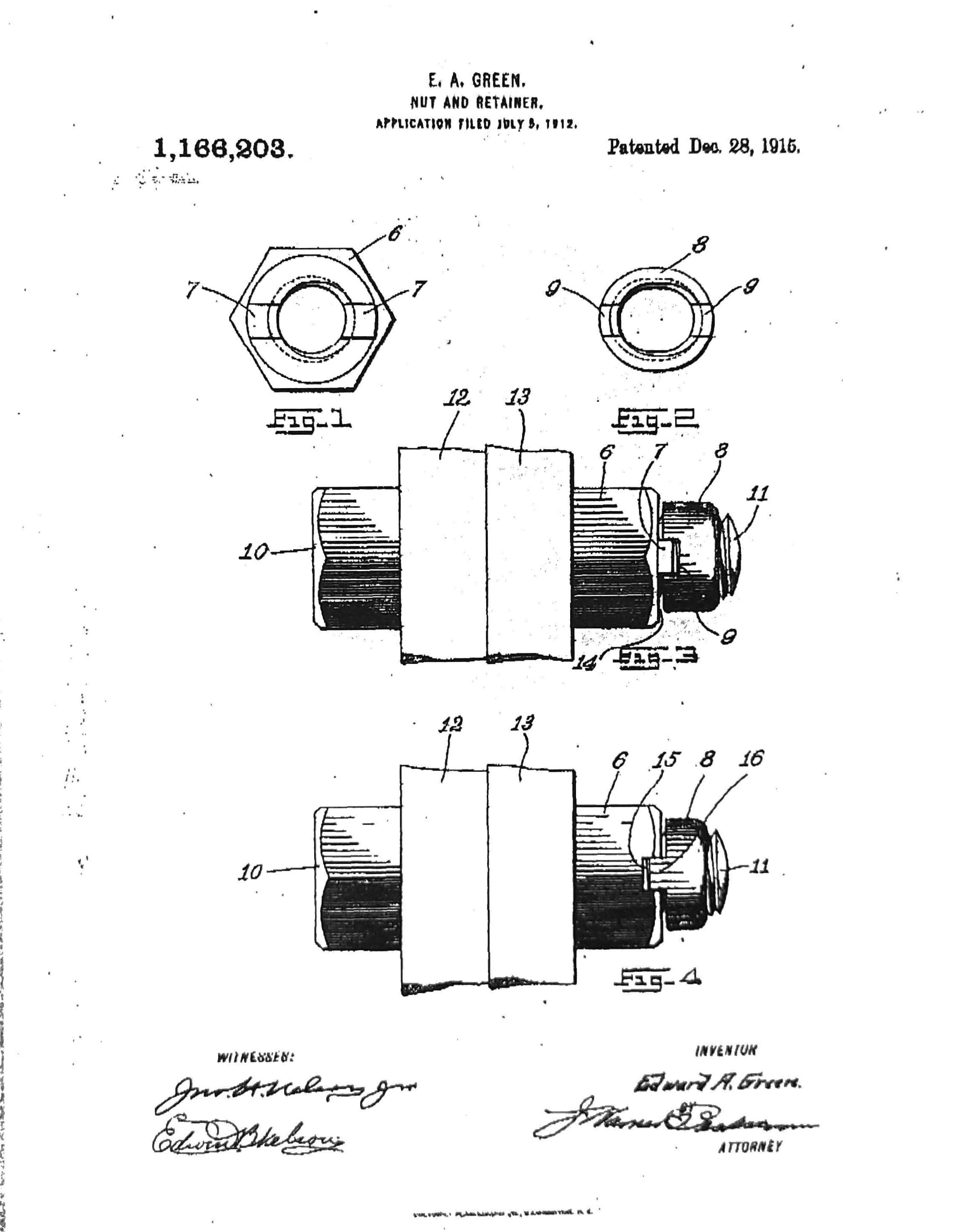
Drawing from 1915

Scroll through the story of Security Locknut below. A MILITARY PRODUCT How It All Began In December 1915, Edward A. Green invented the “nut and retainer.” A few years later, he patented the “nut lock,” paving the way for what is now known as the Security Locknut. This unique locking nut was said to be The Story Behind Prevailing Torque Locknuts
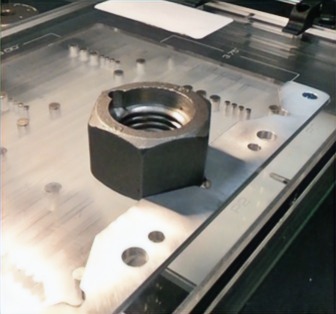
CMM Inspection for Prevailing Torque Locknuts

Security Locknut uses a coordinate-measuring machine (CMM) to monitor manufacturing consistency and quality. Check out the video below for a first-person view of the process.

Does an Impact Wrench Properly Tighten Your Bolted Joint? (Hint: Probably Not.)

Here’s a recent field test showing the installing of a 2”x 4.5 nut that highlights the issue. Left: Nuts were initially tightened with an impact wrench set to 4500 ft lbs to achieve the required clamp load of 138,000 lbs. Right: Next, the nuts were tightened with an electric reaction arm torque multiplier wrench also Does an Impact Wrench Properly Tighten Your Bolted Joint? (Hint: Probably Not.)

Tension Testing: The Effect of Lubrication on K Factor

Surprise results testing bolt tension with different lubricants. Test Setup Bolt and Nut Used for the Tests Predicted Results Before Testing Actual Results Thread Conditions Measured Clamp Force (lbs) Calculated K Factor Link to Video Dry​ 30,000 0.18 Anti-seize paste 32,000 0.17 Anti-seize spray 35,000 0.15 WD-40 spray oil 28,000 0.20 Oil 32,000​ 0.17 https://youtu.be/5LSAIFXt9SI Tension Testing: The Effect of Lubrication on K Factor

What’s the Deal with Castle Nuts?

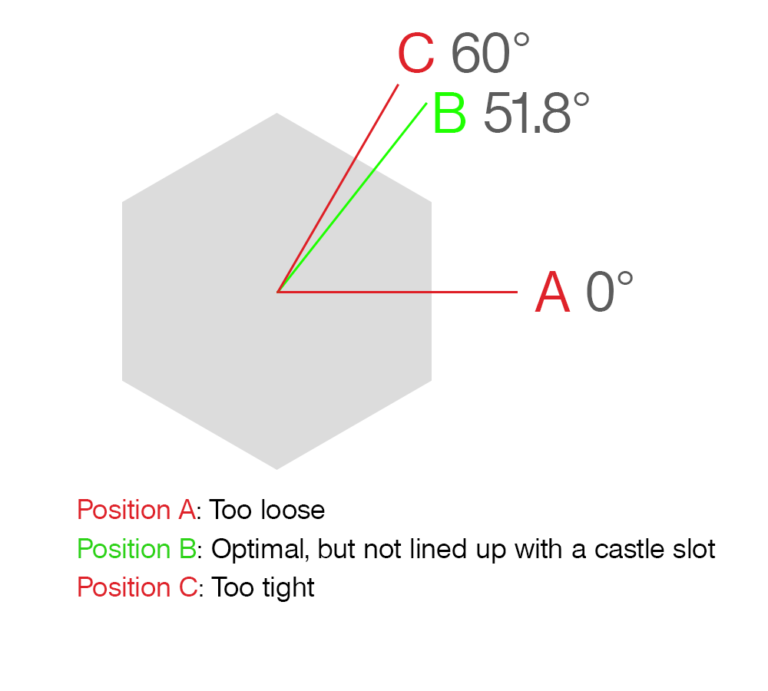
Castellated nuts, often called a castle nuts, employ cotter pins as a locking mechanism. We will walk through two key points that render many castle nut bolted joints ineffective and unreliable. 1. The castle nut must be in a certain orientation to allow the cotter pin through. 2. The difference between full tension and almost What’s the Deal with Castle Nuts?

Double Nuts/Nutting: Does This Work?

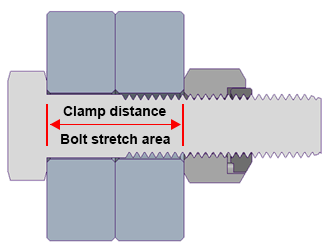
Let’s compare a typical assembly using one nut and a bolt against the use of double nuts. Single Nut When the nut is rotated in the counterclockwise direction, it moves toward the bolt head. Each full rotation (360°) moves the nut by a distance equal to the thread pitch distance. Once the nut contacts the Double Nuts/Nutting: Does This Work?

How Does the Security Locknut Work?

Last time, we discussed why you may not need a locknut if the joint is properly designed and assembled. But, in the real world, on critical applications, this is often difficult to consistently achieve. In these common situations, a locknut can improve joint integrity, reduce maintenance costs, and help prevent catastrophic failure. Here’s how the How Does the Security Locknut Work?

Why You Shouldn’t Need a Prevailing Torque Locknut

You shouldn’t need a locknut if the bolted joint is properly designed and assembled. This means it’s designed to hold the working load, is tightened to the specified value, and the preload force is maintained. This seems simple enough. If this is achieved, vibration forces are not likely to overcome the friction constraints in the Why You Shouldn’t Need a Prevailing Torque Locknut

Torque-Tension Testing

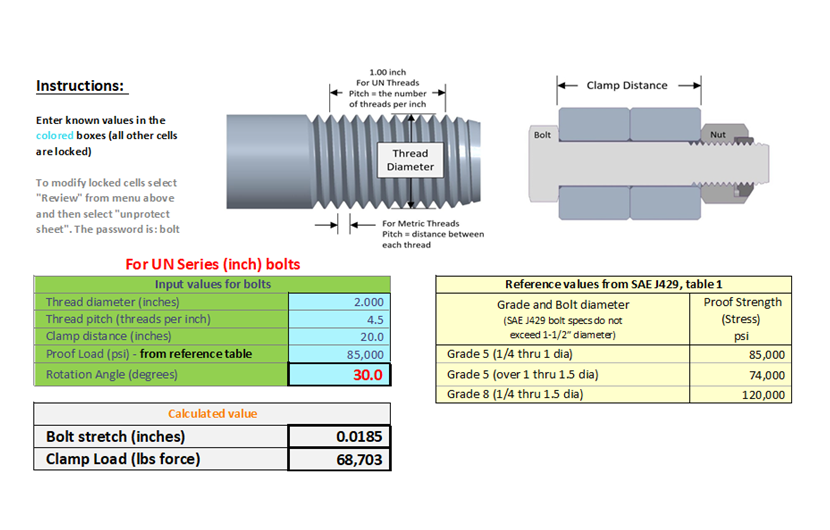
The relationship between input torque and tension is the governing principle behind a well-designed bolted joint. Often, calculated values are not reciprocated in field applications. To determine the tension (also known as preload, clamp force, or clamp load), a Skidmore-Wilhelm Bolt Tension Calibrator can be used in association with a known input torque. Example Test: Torque-Tension Testing

Why is it Important to Keep a Bolted Joint Tight?

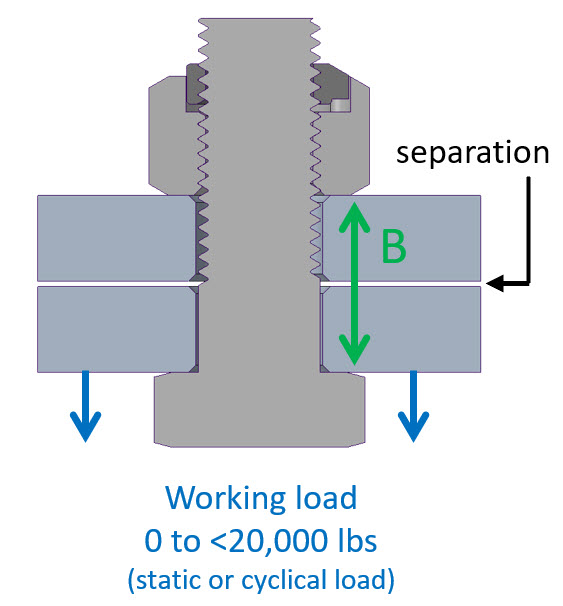
It is well understood that a fastener will fail if it is loaded above its capacity, as shown in example #1 below. What is less obvious is a fastener will also fail if it is loaded below its capacity but is subject to cyclical loading. This condition is shown in example #2 below. A properly Why is it Important to Keep a Bolted Joint Tight?