
 Have you ever searched for seashells or buried treasure on the beach? You might’ve used a plastic screen to sift sand, eagerly awaiting whatever remained. The mining industry uses rotating machinery and other material handling equipment to perform a complex, large-scale version of that activity.
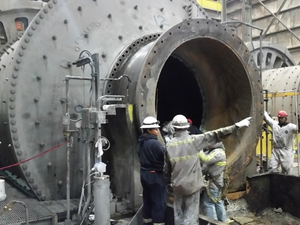
Unlike tools used for treasure hunting, these machines must withstand constant vibration, heavy impact loads, and harsh environmental conditions. Ball mills and semi-autogenous grinding (SAG) mills tumble heavy steel or alloy balls inside massive rotating drums to break down mined materials that may contain valuable minerals like copper, gold, iron or nickel.
Further, much like the plastic screens used to separate sand from treasure, trommels or vibrating screens filter materials based on particle size and remove oversized rocks that can damage equipment.
The difference between mining equipment and beach toys is more than just size – it’s also stakes. Mining equipment operates under demanding conditions that put significant stress on its bolted joints. Over time, those joints can loosen or break, threatening the structural integrity of the machine.
The Security Locknut is designed to withstand these demands and decrease maintenance needs. By doing so, it improves productivity and reduces the risk of serious injury to workers.
Why Mining Equipment Requires High-Performance Fasteners
Prevailing torque locknuts resist loosening, but not all are not optimal for the mining industry.
Polymer-based adhesive locknuts or nylon-insert locknuts falter under the range of temperatures that mining equipment can operate in: High heat degrades polymer-based adhesives and nylon, which reduces their ability to remain locked.
Fasteners made from metal can withstand extreme temperatures, but variants like deformation-based nuts are not suitable for mining equipment that undergoes repeated reassembly, such as vibrating screens and trommels. Deformation-based nuts generate prevailing torque by deforming the nut threads during the manufacturing process. When the nut twists onto a bolt, the bolt threads force the deformed threads into alignment, significantly reducing the nut’s locking ability after one use.
The Security Locknut maintains its prevailing torque through repeated vibration cycles and impact loads and withstands harsh conditions and extreme temperatures. As such, it solves five critical mining equipment operation challenges.
- Maintenance & Inspection Frequency
- Safety
Less frequent repairs reduce workers’ exposure to safety hazards. To address loose components, workers must enter machinery, which can result in serious or fatal injury even when the machines are shut off.The interiors of SAG and ball mill drums are lined with mill liners that are secured with fasteners; a loose connection can damage a mill liner or cause it to loosen or shift. Depending on the orientation of the mill drum when stopped for repairs, workers replacing or reinforcing liners may need to work high above the ground, creating serious risk of falling. Further, steel balls or large pieces of ore could become lodged in various parts of the liners and fall on a worker.
- Productivity & Equipment Downtime
Mined materials are processed in stages, typically via an integrated material-handling system. The materials are automatically delivered from one machine to the next by conveyors, chutes, pumps or other automatic delivery methods, all of which are held together or connected by bolted joints.The process can be simplified as:
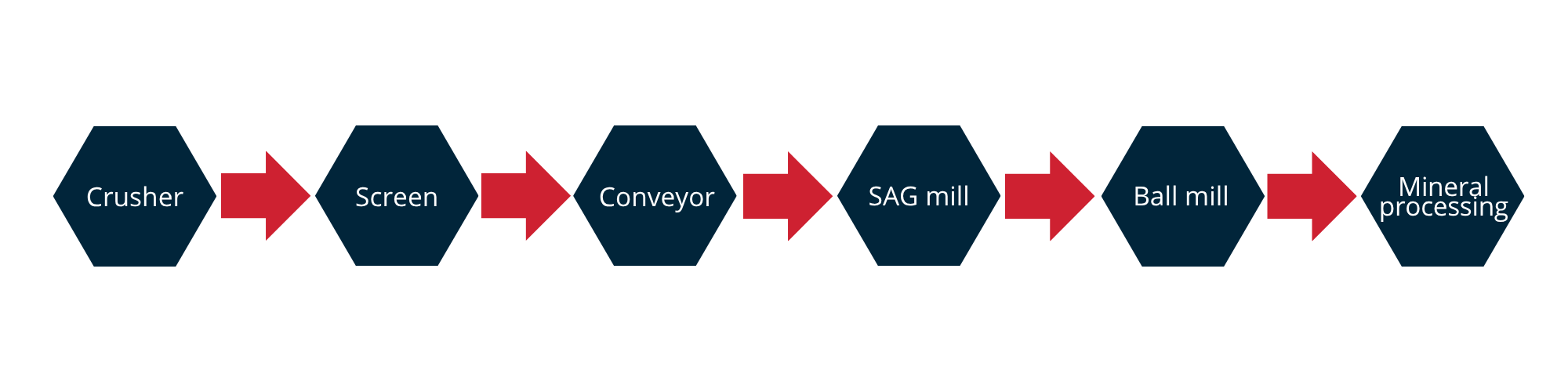 When any one machine or component requires repair or inspection, the entire system must be shut down to avoid injuries or equipment damage. This results in significant downtime and lost productivity.
By extending the time between joint failures and reducing the need for maintenance inspections, the Security Locknut maximizes equipment uptime and allows mining operations to run longer.
- Harsh Conditions & Vibration
Certain prevailing torque locknut designs perform well in stable, predictable environments – but mining equipment is typically operated in environments that are neither stable nor predictable. Machinery is subjected to continuous vibration and successive impact loads, often while exposed to high ambient temperatures, moisture, and corrosive substances.The Security Locknut is made from steel alloy and can be plated with ATD coating (Advanced Thermal Diffusion Galvanizing). It performs reliably in extreme temperatures, saltwater or saline groundwater, and other substances or conditions that can accelerate rust or degrade polymer-based and nylon components.
- Multiple Installation Cycles
Some mining equipment – like crushers, vibrating screens and conveyors – is frequently transported between locations and requires routine disassembly and reassembly. The fasteners holding the equipment together must maintain consistent prevailing torque and clamp load through multiple installation and reassembly cycles.Security Locknuts can be removed and reused many times and maintain consistent prevailing torque. The high level of prevailing torque assists with maintaining joint tension and can be retightened to establish the recommended tension.
To learn more about the Security Locknut’s innovative locking mechanism, read our blog about six prevailing torque locknut designs.
The Security Locknut extends the service life of a bolted joint because it resists loosening and maintains consistent clamp load. Maintenance teams can go longer between inspections and reduce repair frequency.
The Right Fastener for Material Handling Machinery
Mining equipment operates on a larger scale and under more demanding conditions than conventional fasteners are designed for. Persistent vibration and heavy impacts, exposure to extreme temperatures and repeated equipment use compromise other prevailing torque locknuts and conventional fasteners over time, increasing maintenance frequency.
The Security Locknut is the solution. By maintaining consistent prevailing torque and clamp load through the rigors of mining operations, the Security Locknut reduces the frequency of loose connections, maximizes equipment uptime and limits workers’ exposure to maintenance safety hazards.